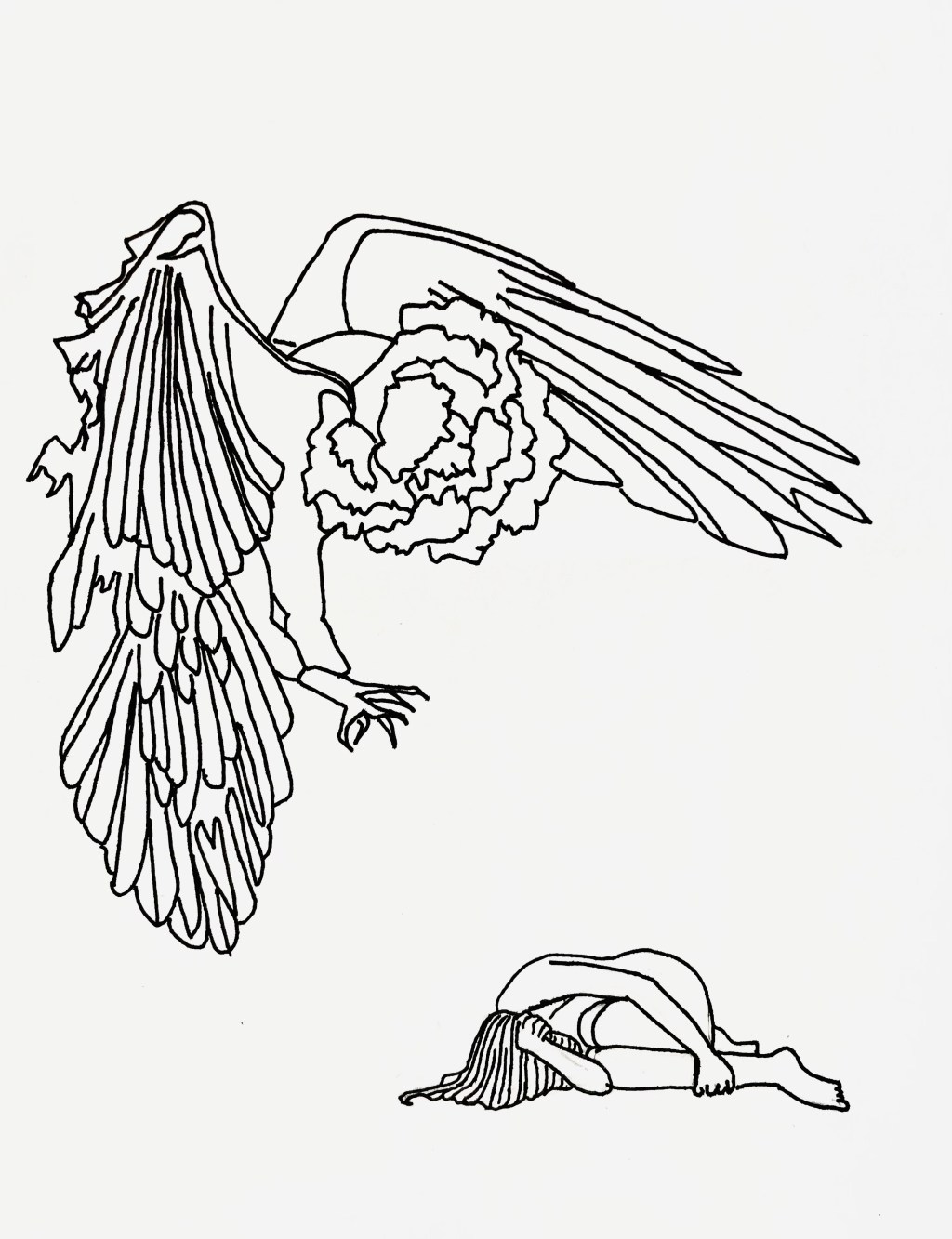
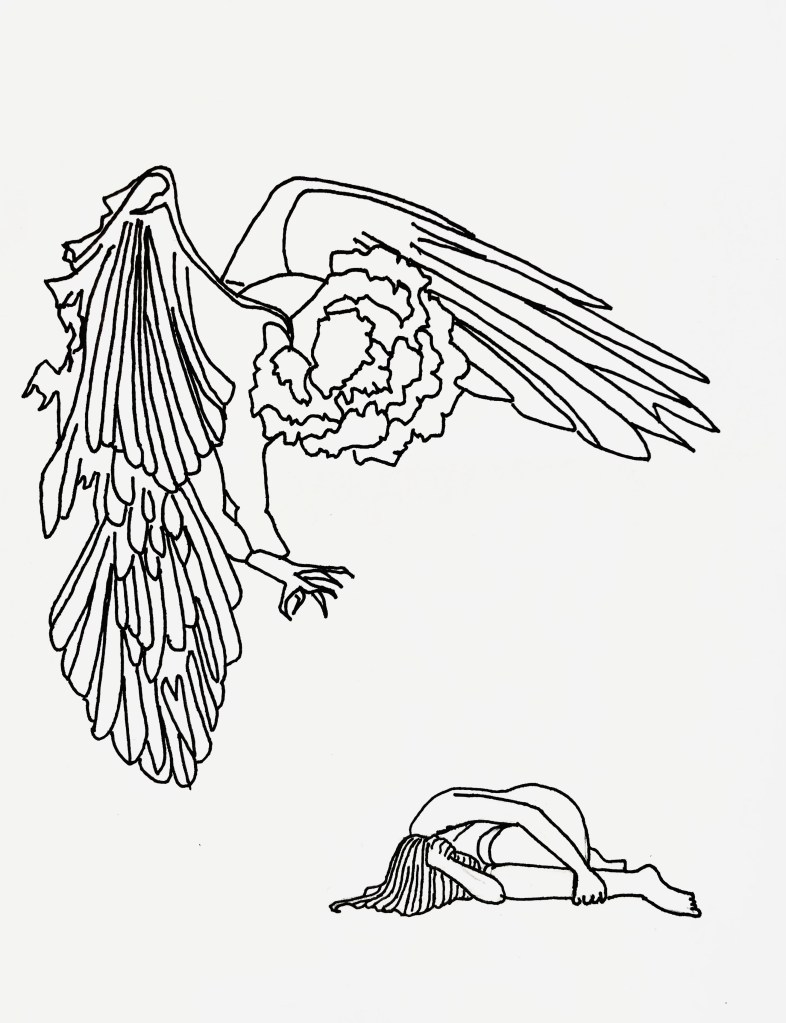
It was Edgar Allen Poe who described a raven as being both a tempter and a tempest. A seducer, a great storm. A winged contradiction that has inspired so much story and lore over the centuries. My current work features the Raven as both antagonist and comrade. I think it is the dichotomy of the Raven that is so interesting. Because of their black plumage and penchant for dining on carrion; ravens have been considered by many to be a sign of death or bad omens. In Celtic mythology, war goddesses such as Nemain often took the shape of a raven; and in Cornwall it is still considered unlucky to kill one. Ravens also feature heavily in tales and depictions of warfare as they were often seen feasting on battlefield remains. In German stories, ravens were supposed to be damned souls.
For all of the dark mythologies that feature the raven, there are several contradictory narratives. There several cultures in the Pacific-Northwest the Raven is actually a key element in creation myth. The indigenous people of Haida Gwaii believe a raven stole the sun, moon, and stars to hang in the sky; and gave us fire and fresh water. In many Native American cultures, the Raven is a symbol of impending change and transformation; acting as a guide to those who see it. The Greeks believed that they were psychopomps (a guide of souls), escorting the dead to the afterlife.
I came across a detail from Norse mythology that brought together all of my themes and tied them to the concepts of grief and memory. The god Odin was supposed to be accompanied by two Ravens who advised him. One represented thought and the other memory. Thoughts become memories and memories can govern thought.
All of the Ravens’ contradictions are what ultimately inspired their complex roles in my work. I tried to create them as a darkly tempting and imposing force. I didn’t want any friendliness or compassion, just a stark and daunting choice.
.
 Rhellie Guerra
Leave a comment